Why Early Intervention for Autism in India Can Change Everything
Written by Dr. Priyanka Jain Bhabu | Founder & CEO, CRIA Foundation | Reading time: 9 minutes
Published: Feb 2026 | Category: Therapy and Intervention
Table of Contents
- The Question Every Parent Asks Too Late
- What the Brain Is Doing in the First Five Years
- The Real Cost of Waiting in India
- What Early Intervention Actually Involves
- What the Research Shows: Outcomes Families Can Expect
- The Hidden Barrier: Stigma, Denial, and the Pressure to ‘Wait and See’
- What Indian Families Can Do Right Now
- How CRIA Foundation Supports Families at Every Stage
- Frequently Asked Questions About Early Intervention for Autism in India
- The Window Is Open - But It Won't Wait
You already know your child has autism, or you strongly suspect they might. You’ve read about what autism is. You’ve started learning about therapy options. And somewhere along the way, someone told you that starting early is important.
But no one has told you why. Not really.
This article is about the why. About what is happening inside your child’s brain right now that makes the timing of support so significant. About what families in India lose when they wait, and what they gain when they don’t. About why early intervention for autism in India is not a preference or a luxury. It is the single most important factor in long-term outcomes.
If you have already begun therapy, this will confirm that you made the right call. If you are still waiting, for a diagnosis, for certainty, for the right moment, we hope this helps you understand that the right moment is now.
1. The Question Every Parent Asks Too Late
“If I had started sooner, would things be different?”
It is one of the most painful questions parents carry, usually after years of waiting for a clearer diagnosis, hoping concerns would resolve on their own, or being reassured by well-meaning family that everything would be fine.
The answer, according to decades of developmental science, is almost always: yes.
This is not said to cause guilt. Guilt is rarely useful and never the point. It is said because understanding what the early years represent neurologically, and what is at stake when they pass, is the most powerful and honest argument for urgency that exists. Indian families deserve to have that argument made clearly, not buried in clinical language.
2. What the Brain Is Doing in the First Five Years
Between birth and age five, the human brain undergoes more change than at any other period in life. Neurons form connections, called synapses, at a rate of up to one million per second in the earliest months. The brain is highly plastic: flexible, adaptive, and extraordinarily responsive to experience.
What this means in practical terms is that the brain is most open to learning during this window. Skills taught, practised, and reinforced during this period are wired in more efficiently and more durably than skills learned later. New neural pathways form with greater ease. The brain literally reshapes itself in response to what a child experiences.
The brain is most plastic, most open to learning and reorganisation, in the first five years of life. This is the window that early intervention for autism is designed to open.
For autistic children, this window is not smaller. But the supports they need to make full use of it are different. Without appropriate, structured, consistent input, the brain’s plastic potential goes unused in the areas that matter most: communication, social understanding, and adaptive behaviour.
After around age five to seven, synaptic pruning intensifies. The brain begins to specialise and consolidate. Learning continues throughout life, but it becomes less effortless, and the pace of developmental change slows. Skills that can be established naturally in a two-year-old require significantly more intensive effort in a seven-year-old. This is why early intervention for autism in India is not simply preferable. It is neurologically different in kind, not just in degree.
3. The Real Cost of Waiting in India
In India, the average age at which an autistic child receives a formal diagnosis is between three and five years. For families outside major urban centres, it is often later still. By the time a diagnosis is confirmed, therapy is recommended, and a programme begins, a child may be six or seven years old, at or beyond the peak of the neurological window.
Several factors drive these delays:
- Limited awareness among parents and primary care physicians of what autism looks like in very young children.
- Cultural pressure to wait and see, with concerns dismissed as shyness, late bloomer status, or family resemblance.
- Stigma around developmental diagnoses, which causes families to delay seeking evaluation.
- Shortage of trained diagnostic professionals, particularly in Tier 2 and Tier 3 cities.
- The belief, incorrect but common, that a formal diagnosis must precede any intervention.
Each of these delays carries a measurable cost. Studies show that children who begin structured intervention before age three make significantly greater gains in communication and adaptive behaviour than those who begin at five or six. The gap in outcomes, in language, in social connection, in independence, can be substantial and long-lasting.
For every month a child spends without appropriate support during the early years, the work of building those skills becomes harder, not impossible, but harder, slower, and requiring more intensive effort later.
4. What Early Intervention Actually Involves
Early intervention for autism in India is not a single therapy delivered in a clinic once a week. It is a coordinated, multi-component approach, drawing on evidence-based methods in behaviour, communication, and development, designed to meet a young child where they are and build the skills they need across all environments.
For children on the autism spectrum, early intervention typically brings together:
- Applied Behaviour Analysis (ABA): structured, data-driven teaching of communication, social, and adaptive skills. ABA is explored in depth in our previous article.
- Speech and Language Therapy: building functional communication from requesting and labelling through to conversation and narrative.
- Occupational Therapy: addressing sensory processing, fine motor development, and daily living skills.
- Parent and Caregiver Training: equipping families with strategies to support their child’s learning throughout the day.
- Social Skills Development: structured, supported opportunities to practise interaction, turn-taking, and reading social cues.
The specific combination depends on the individual child. At CRIA Foundation, every programme begins with a comprehensive individual assessment, never a template. Learn more about our approach to family and child services.
5. What the Research Shows: Outcomes Families Can Expect
The evidence base for early autism intervention is one of the strongest in developmental psychology. Here is what research consistently shows:
Communication gains
Children who receive structured early intervention show significantly greater language development than those who do not. For pre-verbal children, early support can be the difference between remaining non-verbal and developing meaningful communication before school age.
Social connection
Early intervention in social skills increases a child’s ability to initiate and sustain interaction with family members and peers. This leads to genuine friendships and meaningful inclusion in school settings.
Independence and reduced long-term need
Research consistently shows that children who receive early and intensive intervention require fewer support services as they grow older. Many reduce their level of need significantly by school age.
Family wellbeing
Parent training reduces caregiver stress and increases confidence. Parents become active participants in their child’s progress, and that shift changes everything.
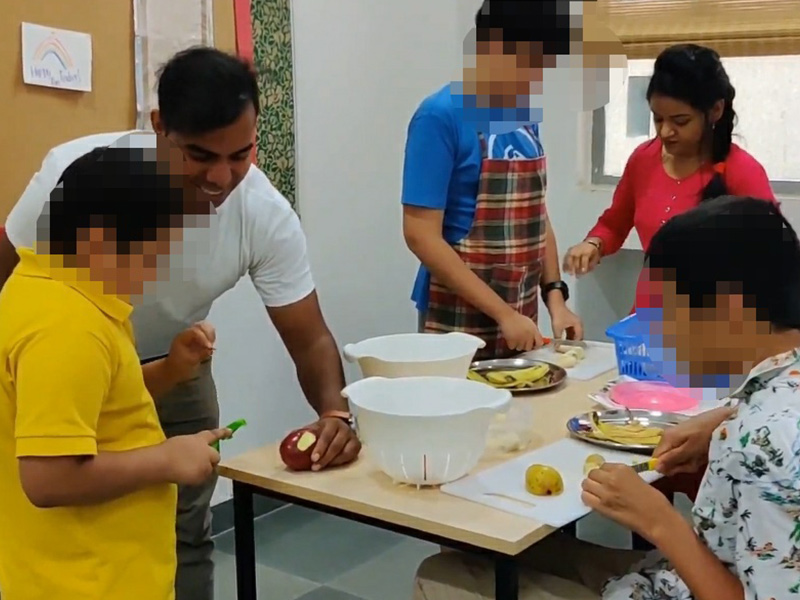
Early intervention fosters engagement and skill building through play.
6. The Hidden Barrier: Stigma, Denial, and the Pressure to ‘Wait and See’
Of all the factors that delay early intervention for autism in India, perhaps none is more powerful than the social pressure families face from within their own communities.
“He’ll catch up.” “Don’t label the child so early.” “What will the relatives say?”
These voices come from love. But they cost children time they cannot get back. The fear of stigma is real, but a diagnosis is not a label; it is a key to services and support. Crucially, children do not need a formal diagnosis to begin developmental support. Support can, and should, begin the moment concerns are identified.
7. What Indian Families Can Do Right Now
- Trust your instincts and act on them: Seeking an evaluation is not overreacting. It is responsible parenting.
- Do not wait for a diagnosis to begin support: Developmental therapies do not require a formal autism diagnosis to begin. If your child has concerns, support can start now.
- Document what you observe: Write down specific behaviours: what you see, how often, and in what context.
- Ask your specialist three specific questions:
- What do you observe in my child today?
- What do you recommend we start immediately, without waiting?
- What can we do at home, right now, to support their development?
- Prioritise quality over proximity: Credentialled staff, individual assessments, and data-tracked progress are non-negotiable markers of a quality programme.
8. How CRIA Foundation Supports Families at Every Stage
Since 2006, CRIA Foundation has worked alongside Indian families at the earliest and most uncertain stages of the autism journey. Every programme at CRIA begins with a comprehensive individual assessment. Goals are designed in collaboration with the family, and progress is tracked and adjusted continuously.
What CRIA offers families seeking early intervention:
- Comprehensive developmental assessments by qualified behaviour analysts.
- Individually designed ABA-based programmes from toddler age onwards.
- Intensive parent and caregiver training integrated into every programme.
- Online and in-person service delivery accessible across India and internationally.
- Professional education and certification to train qualified practitioners across India.
You can read about the team behind CRIA’s work, hear from families on our testimonials page, or explore how CRIA supports schools and institutions. When you are ready, contact CRIA Foundation here to book a free consultation.
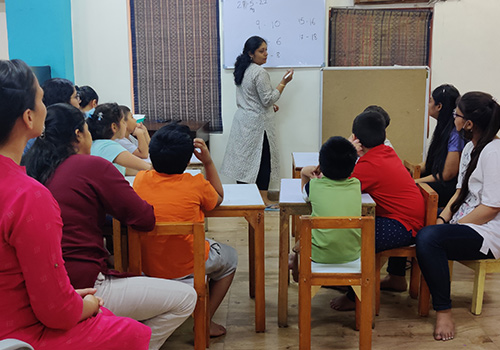
Empowering parents is the core of sustainable progress.
9. Frequently Asked Questions About Early Intervention for Autism in India
1. At what age should early intervention for autism begin in India?
Research consistently shows that intervention before age three produces the greatest long-term outcomes. However, meaningful progress is possible at any age, and support can begin before a formal diagnosis is confirmed.
2. Can early intervention help a non-verbal child start speaking?
Yes. For many pre-verbal or minimally verbal children, early structured intervention targeting functional communication has led to significant gains in language.
3. Does my child need an official autism diagnosis before starting therapy in India?
No. A formal diagnosis is not a prerequisite for beginning developmental support. Speech therapy, occupational therapy, and ABA-based programmes can all begin on the basis of observed developmental concerns.
4. What happens if early intervention is delayed?
The brain's developmental window narrows over time. Skills that can be established efficiently during the early years require more intensive effort when addressed later. Early action produces disproportionately large returns.
5. How many hours of early intervention does an autistic child need?
Appropriate intensity depends on the individual child. Research supports higher-intensity programmes, typically 15 to 25 hours per week, for children with significant delays.
6. Is early intervention for autism available online in India?
Yes. CRIA Foundation offers online teletherapy and parent training to families across India and internationally. During the pandemic, we supported more than 120 families per day through online delivery.
7. How do I know if an early intervention programme is high quality?
Look for: a BCBA-qualified supervisor; a comprehensive individual assessment; measurable, family-informed goals; ongoing data tracking; and active parent training.
Your child is not broken. They are different, and in the right environment, with the right support, different can be extraordinary.
At CRIA Foundation, we have seen it happen for over 15 years.
Explore our mission, see our testimonials, or learn how to make a difference.