
Autism and School in India: A Parent’s Complete Guide
Written by Dr. Priyanka Jain Bhabu | Founder & CEO, CRIA Foundation | Reading time: 10 minutes
Published: Feb 2026 | Category: School & Education
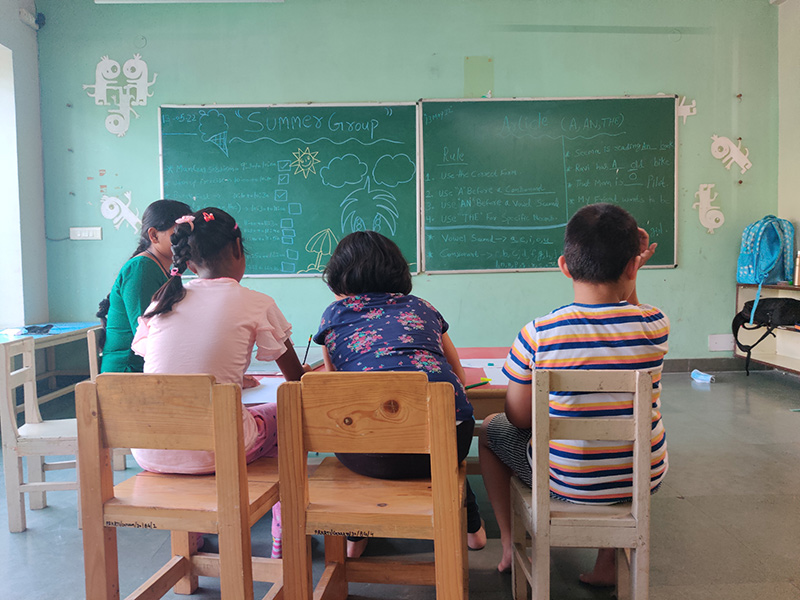
Table of Contents
- The School Question No One Prepares You For
- Your Child’s Legal Rights: What the RPwD Act 2016 Actually Guarantees
- Mainstream, Special, or Inclusive? Understanding Your Options in India
- What Is an IEP and Why Your Child Needs One
- How to Choose the Right School: Questions Every Parent Should Ask
- What to Do When a School Refuses Admission
- Supporting Your Child Through the School Day
- When School Is Not Working: Signs It Is Time to Reassess
- How CRIA Foundation Supports Families and Schools
- Frequently Asked Questions About Autism and School in India
- Your Child Belongs in a Classroom: The Right One
The moment most parents dread is not the diagnosis. It is the school admission meeting.
You sit across the table from a principal or admissions coordinator. You have prepared what to say. You have rehearsed how to explain your child, their strengths, their needs, what they require to learn. And somewhere in the first five minutes, you can tell: this school does not want to take your child.
Or perhaps the school says yes, and then the calls start. Your child is struggling. Other parents are complaining. Can you come in? Can you take them home early? Can you sit outside the classroom, just in case?
Navigating autism and school in India is one of the most exhausting, emotionally complex, and practically important challenges autistic children’s families face. It involves legal rights most parents do not know they have, decisions between school types that are rarely explained clearly, and daily negotiations that require both firmness and diplomacy.
This guide is written for all of you: the parent just beginning the school search, the parent already deep in an inclusion that is not working, and the parent wondering whether the school their child attends is actually the right fit.
1. The School Question No One Prepares You For
When families begin the autism journey, diagnosis, therapy, early intervention, school often feels like a future problem. Something to think about later.
But later arrives quickly. And when it does, most families discover that the Indian education system is largely unprepared for autistic children, that their legal rights are poorly understood even by the schools themselves, and that finding the right educational environment requires a level of informed advocacy that no one warned them they would need.
The good news is that the legal framework exists. India has one of the more progressive disability education laws in Asia. The challenge is that it is inconsistently implemented, and families who know their rights are far better positioned than those who do not.
2. Your Child’s Legal Rights: What the RPwD Act 2016 Actually Guarantees
The Rights of Persons with Disabilities Act 2016 (RPwD Act) is the primary legislation governing the rights of autistic and other disabled children in India. Here is what it guarantees, in plain language, for educational settings:
The right to free and appropriate education
All children with disabilities, including autism, have the right to free education up to the age of 18 in an appropriate educational setting. Schools, both government and recognised private institutions, cannot refuse admission to a child solely on the basis of disability.
The right to reasonable accommodation
Schools are legally required to provide reasonable accommodations to support a disabled child’s participation in education. This includes modifications to teaching methods, assessment formats, seating arrangements, sensory considerations, and communication supports.
The right to an inclusive environment
The RPwD Act explicitly promotes inclusive education, the placement of disabled children in mainstream classrooms with appropriate support, as the preferred model. Segregated special schooling remains an option, but the Act’s intent is integration wherever possible.
The RPwD Act 2016 gives autistic children the legal right to education in mainstream schools with reasonable accommodation. Most schools do not volunteer this information. Parents who know it are in a fundamentally different position.
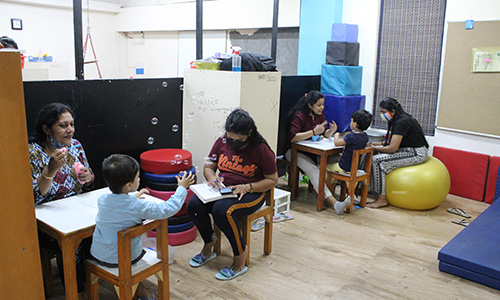
Knowing your child’s legal rights before walking into a school meeting changes everything.
3. Mainstream, Special, or Inclusive? Understanding Your Options in India
One of the most confusing aspects of schooling for autistic children in India is understanding what the different school types actually mean in practice. Every child’s needs, communication profile, and learning style is different.
- Mainstream schools: Standard schools following the regular curriculum. The best offer shadow teacher support and collaboration with therapists; the worst offer “inclusion” in name only.
- Inclusive schools (dedicated model): Specifically designed around inclusive education with structured support systems and adapted curricula.
- Special schools: Cater exclusively to children with disabilities. They offer individualised programmes, smaller class sizes, and on-site therapeutic services.
- Home-based and tele-education: Structured learning for children not yet ready for school. CRIA Foundation has delivered such programmes since the pandemic.
4. What Is an IEP and Why Your Child Needs One
An Individualised Education Plan (IEP) is a document that sets specific educational goals, accommodations, and progress monitoring for a child. While not yet mandated uniformly in India by National Education Policy (NEP), it is best practice.
A quality IEP for an autistic child should include:
- The child’s current level of functioning.
- Specific, measurable goals for the academic year.
- Accommodations and modifications for teaching and assessment.
- Support services (shadow teacher, speech therapy, etc.).
- Review schedules and family involvement protocols.
CRIA Foundation’s school support programme works directly with schools to help build these IEP frameworks.
5. How to Choose the Right School: Questions Every Parent Should Ask
Visiting a school requires due diligence. Ask the following questions:
- “How many autistic students are currently enrolled?”
- “What specific training has your staff received in special educational needs?”
- “Do you develop Individualised Education Plans?”
- “Is there a quiet space available if a child becomes dysregulated?”
- “How do you handle situations where a child’s behaviour disrupts the classroom?”
6. What to Do When a School Refuses Admission
Refusal on the basis of disability is illegal under the RPwD Act 2016. If this happens:
- Put the conversation in writing: Follow up via email asking the school to confirm their position.
- Escalate formally: Complaints can be made to the State Commissioner for Persons with Disabilities.
- Seek advocacy: CRIA Foundation can help families navigate these admissions disputes.
7. Supporting Your Child Through the School Day
Getting in is only the beginning. To support your child day-to-day:
- Build a relationship with the teacher: Don’t wait for a crisis to communicate.
- Create a one-page profile: Summarize your child’s strengths, triggers, and communication style for all staff.
- Maintain the bridge: Ensure therapists and school staff are communicating to generalise skills.
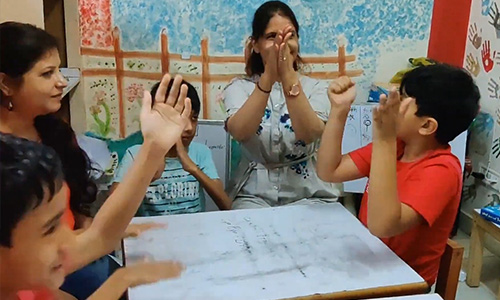
The relationship between the teacher and your family is a vital support pillar.
8. When School Is Not Working: Signs It Is Time to Reassess
These signs suggest the placement may need to change:
- Consistent distress or physical illness on school mornings.
- The school calls regularly for you to manage your child’s behavior.
- Your child is routinely excluded from school activities or trips.
- There is no meaningful learning or access to the curriculum.
9. How CRIA Foundation Supports Families and Schools
CRIA Foundation works with schools across India to build capacity for genuine inclusion. Our Family and Child Services include direct support for navigating school placements and preparing for admission meetings. We have supported over 1,000 families across ten countries through these specific challenges.
10. Frequently Asked Questions About Autism and School in India
1. Can an Indian school legally refuse admission to an autistic child?
No. Under the RPwD Act 2016, government and recognised private schools cannot refuse admission solely on the basis of disability. If they do, parents can escalate to the State Commissioner for Persons with Disabilities.
2. What is a shadow teacher and does my child need one?
A shadow teacher provides one-on-one classroom support. Whether a child needs one depends on their support needs and the school’s capacity. It can be transformative, but the goal should always be to gradually fade support as independence grows.
3. My child’s school keeps calling me to take them home early. What should I do?
This is a sign the school lacks adequate support strategies. Request a formal meeting with the principal to develop a behavior support plan. It is the school’s responsibility to manage the classroom environment with reasonable accommodation.
4. Should my child attend a mainstream or special school?
There is no single answer. Consider your child’s current communication profile, the specific quality of the school, and your family’s capacity to supplement school with external therapy.
Your child is not broken. They are different, and in the right environment, with the right support, different can be extraordinary.
At CRIA Foundation, we have seen it happen for over 15 years.
Explore our mission, see our testimonials, or learn how to make a difference.