What Is ABA Therapy? A Complete Guide for Parents in India
Written by Dr. Priyanka Jain Bhabu | Founder and CEO, CRIA Foundation | Reading time: 9 minutes
Published: Feb 2026 | Category: Therapy and Intervention
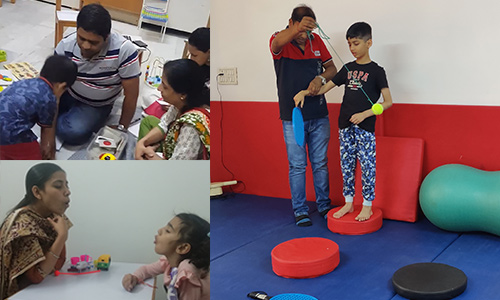
Table of Contents
- What Is ABA Therapy?
- The Research Behind ABA
- What Does an ABA Session Look Like?
- Skills ABA Therapy Can Address
- Common Misconceptions About ABA
- Is ABA Therapy Right for Your Child?
- What to Look for in a Quality ABA Programme
- ABA Therapy in India: Current Landscape
- How CRIA Foundation Delivers ABA Therapy
- Frequently Asked Questions About ABA Therapy
For many Indian parents, the term ABA therapy appears shortly after an autism diagnosis, often mentioned by a paediatrician, a therapist, or another parent. It is frequently cited as a gold-standard intervention, yet it is rarely explained in a way that is clear, accessible, or honest about what parents can realistically expect.
This article provides a thorough, practical overview of ABA therapy in India: what it is, how it works, what the research says, and what families need to consider before beginning. It is written for parents who want accurate information, not marketing language.
1. What Is ABA Therapy?
ABA stands for Applied Behaviour Analysis. It is a scientific discipline that applies principles of learning and behaviour to bring about meaningful, measurable improvements in socially significant skills. In the context of autism therapy in India and globally, ABA is used to teach communication, social, academic, and daily living skills, as well as to reduce behaviours that interfere with learning or safety.
The word ‘applied’ distinguishes it from theoretical behaviour analysis: ABA focuses on real-world behaviours that matter for the individual’s quality of life. The word ‘analysis’ reflects that all decisions are data-driven. Therapists track progress systematically and adjust programmes based on what the data shows, not on intuition or assumption.
ABA is not a single technique. It is a framework, grounded in the science of learning, that encompasses a range of evidence-based methods. What these methods share is a focus on understanding the function of behaviour: why a behaviour occurs, what triggers it, what maintains it, and what can replace it.
“ABA strategies made a difference. You changed my child’s life.” - A CRIA Foundation parent
2. The Research Behind ABA
ABA has one of the largest and most rigorous evidence bases of any autism intervention. Research into its application with autistic children began in the 1960s and has accumulated over five decades of peer-reviewed studies, systematic reviews, and clinical trials. It is endorsed by the World Health Organisation, the American Academy of Pediatrics, and national health bodies across multiple countries as an evidence-based treatment for autism.
ABA practitioners are trained and certified through the Behaviour Analyst Certification Board (BACB), the international standard for the profession. Board Certified Behaviour Analysts (BCBAs) must complete graduate-level academic training, supervised fieldwork hours, and pass a rigorous examination before they can practise independently.
CRIA Foundation has been part of the movement to bring internationally certified ABA therapy to India since 2006, and continues to lead in training and certifying therapists and educators across the country.
3. What Does an ABA Session Look Like?
A well-designed ABA programme begins with a comprehensive assessment of the child. The behaviour analyst evaluates the child’s current skills across all developmental domains, identifies the function of any challenging behaviours, and establishes individualised goals in collaboration with the family. Every programme is different, because every child is different.
Within sessions, therapists draw on a range of teaching methods depending on the child’s goals and learning profile:
Discrete Trial Training (DTT)
A structured, one-to-one teaching format in which skills are broken into small, clearly defined steps and taught through repeated practice with consistent feedback. DTT is particularly effective for establishing foundational skills such as attending, matching, imitation, and early language.
Natural Environment Teaching (NET)
Skills are taught within naturally occurring routines and play activities rather than at a table. NET improves the generalisation of skills to real-world settings and is used to teach functional communication, social interaction, and play.
Verbal Behaviour (VB) Approach
A specific application of ABA that analyses language by its function rather than its form. The VB approach teaches children to use language as a purposeful tool: to request items, label objects, respond to questions, and engage in conversation.
Parent and Caregiver Training
Parent training is not supplementary to good ABA; it is integral to it. Families are taught the same strategies used during sessions so that learning extends into the home, school, and community. CRIA Foundation’s family and child services place significant emphasis on building caregiver capacity, because the hours a child spends with their family far exceed the hours spent with a therapist.
Social Skills Training
Structured opportunities to practise and develop the specific social behaviours that children with autism often find challenging: turn-taking, perspective-taking, reading facial expressions, initiating and maintaining conversation, and building peer relationships.
Show a relaxed, play-based setting. The child should appear engaged, not drilled.
4. Skills ABA Therapy Can Address
ABA therapy is most closely associated with autism, but its principles apply across a range of developmental and learning needs. For autistic children specifically, a well-designed ABA programme can address:
- Functional communication, from requesting basic needs to complex conversation
- Receptive language and instruction-following
- Social skills, including turn-taking, shared attention, and reading social cues
- Play skills, including imaginative and cooperative play
- Self-care and daily living skills, such as dressing, hygiene, and meal routines
- Pre-academic and academic skills, including attention, literacy readiness, and numeracy
- Emotional regulation and coping strategies
- Reducing behaviours that interfere with learning, safety, or social inclusion
- Generalisation of skills across settings, people, and contexts
- Independence in navigating daily environments
The specific goals for a given child will depend on their age, current skills, family priorities, and what is most meaningful for their quality of life. Goal-setting is always collaborative between the therapist and the family.
5. Common Misconceptions About ABA
ABA therapy has been subject to both uncritical enthusiasm and significant misrepresentation. The following clarifications address the most common concerns raised by parents in India.
Myth: ABA uses punishment and aversive techniques to control children’s behaviour. Reality: Contemporary, ethical ABA is based entirely on positive reinforcement. The goal is to increase desired behaviours by making them rewarding, not to suppress behaviour through punishment or discomfort. Any programme incorporating aversive methods does not reflect current ethical standards and should be avoided.
Myth: ABA aims to make autistic children appear neurotypical by suppressing their natural behaviours. Reality: The aim of ABA is to develop skills that increase an individual’s independence and quality of life, not to erase their identity. Ethical ABA respects neurodiversity. Repetitive behaviours, for example, are only addressed when they cause harm or significantly restrict the child’s access to learning and social participation.
Myth: ABA is only beneficial for very young children. Reality: While early intervention produces the greatest outcomes, ABA is effective across all age groups. Adolescents and adults with autism can make meaningful progress in communication, vocational skills, and independent living through well-designed ABA programmes.
Myth: ABA consists of hours of robotic, table-based drills. Reality: Early ABA programmes in the 1960s and 1970s were often highly structured and directive. Modern ABA integrates learning into natural routines, play, and everyday activities. A quality programme looks nothing like rote drilling; it is dynamic, responsive, and built around the child’s interests.
Myth: ABA is only for children with severe autism. Reality: ABA is individualised and effective across the entire spectrum, from children who are pre-verbal to those with strong language skills who need support with social communication and self-regulation.
6. Is ABA Therapy Right for Your Child?
For children who have received an autism diagnosis, ABA therapy is among the most thoroughly evidence-based interventions available. Whether a specific programme is appropriate depends on the quality of the assessment, the design of the programme, and the qualifications of the team delivering it.
A thorough assessment conducted by a qualified behaviour analyst should precede any ABA programme. This assessment establishes where the child currently is, what their priorities are, and what methods are likely to be most effective. Parents should be closely involved in this process.
A diagnosis alone is not sufficient grounds to start any programme. The question is not simply whether ABA is appropriate for a child with autism; it is whether this particular programme, designed by this particular team, is appropriate for this particular child. Parents are encouraged to ask detailed questions before committing.
7. What to Look for in a Quality ABA Programme
The quality of ABA therapy varies considerably across providers in India. The following criteria can help families evaluate any programme they are considering.
- Qualified supervision. The programme should be designed and supervised by a Board Certified Behaviour Analyst (BCBA) or an equivalent internationally recognised qualification. Ask for credentials directly.
- Comprehensive initial assessment. Any reputable programme begins with a thorough evaluation of the child’s current skills, learning profile, and the function of any challenging behaviours. A programme that begins without assessment is not evidence-based.
- Individually designed goals. Goals should be specific to the child and developed in collaboration with the family. Generic curricula applied uniformly to all children are not a feature of quality ABA.
- Ongoing data collection and review. Progress should be tracked systematically, with regular review and adjustment of the programme based on what the data shows.
- Active parent involvement. Families should be trained in programme strategies and kept informed of progress at every stage. A programme that excludes parents from the process is missing a critical component.
- Positive, respectful environment. The child should be comfortable and engaged in sessions. Reluctance or distress is a signal that something needs to change.
- Clear communication about methods and goals. Any quality provider should be able to explain what they are doing and why in plain language. Vagueness about methods is a concern.
8. ABA Therapy in India: Current Landscape
Access to quality ABA therapy in India has grown considerably since the early 2000s, but availability remains uneven. Qualified BCBAs are concentrated in metropolitan areas, and families in smaller cities and rural regions often have limited or no access to certified practitioners.
Several other factors affect the landscape for families seeking ABA support in India:
- The number of certified BCBAs practicing in India remains low relative to the population of autistic children who could benefit from ABA.
- Significant variation exists in programme quality, with some centres offering ABA-labelled services without adequately trained staff.
- Costs range widely, from subsidised services through NGOs to expensive private programmes.
- Online services and teletherapy have substantially expanded access, including for families outside major cities and across international borders.
- Cultural factors, including stigma and pressure from extended family, continue to delay many families from seeking a diagnosis and beginning intervention.
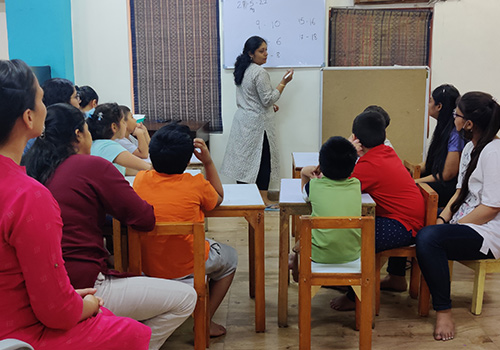
CRIA Foundation has worked to address these gaps directly, both through direct service delivery and through its professional education and certification programmes. Training more qualified practitioners is the most scalable way to improve access across India. CRIA also works with schools and institutions to embed evidence-based practice into educational settings.

Illustrate the teletherapy model. Real home environment. Shows accessibility beyond geography.
9. How CRIA Foundation Delivers ABA Therapy
CRIA Foundation has been providing ABA therapy in India since 2006. The organisation was founded in response to the absence of internationally certified, evidence-based services on the Indian subcontinent, and remains committed to that original mission: bringing rigorous, compassionate, professionally delivered autism support to Indian families.
CRIA’s approach integrates direct therapy with strong family involvement and professional development. All programmes are individually designed following comprehensive assessment, regularly reviewed against data, and adjusted as the child progresses.
During the COVID-19 pandemic, CRIA transitioned rapidly to online tele-education, supporting more than 120 families per day. This capacity for remote delivery has since become a permanent part of CRIA’s service model, extending its reach to families in ten countries.
CRIA’s services include:
- Family and Child Services: individualised ABA programmes delivered in-person and online.
- Professional Education and Certification: training for therapists, educators, and caregivers.
- School and Institutional Support: consultation for schools seeking to implement inclusive practices.
- Research and Publication: contributing to the evidence base for the Indian context.
CRIA has served over 1,000 families across ten countries and trained more than 500 teachers and therapists. Families who have worked with CRIA share their experiences on the Testimonials page.
10. Frequently Asked Questions About ABA Therapy
What does ABA stand for?
ABA stands for Applied Behaviour Analysis. It is a scientific approach to understanding behaviour and teaching skills, widely used with autistic children and adults. It is one of the most extensively researched interventions in developmental disability.
Is ABA therapy safe for children?
When delivered by qualified, certified practitioners, ABA therapy is safe and beneficial. Ethical ABA uses positive reinforcement and does not involve punishment, pain, or distress. Parents are encouraged to ask providers about their methods and qualifications before beginning any programme.
How many hours of ABA therapy does a child need each week?
The appropriate intensity depends on the child’s age, needs, and goals. Research supports the benefits of early intensive intervention at 25 to 40 hours per week for young children, but shorter, well-designed programmes combined with parent training are also effective.
How long before ABA therapy shows results?
This varies considerably depending on the child, the programme design, and the specific goals being targeted. Some families notice meaningful changes within weeks. Significant developmental progress typically occurs over months to years of consistent intervention. ABA is a long-term commitment, not a short-term fix.
Is ABA therapy available online in India?
Yes. CRIA Foundation has been delivering ABA therapy and parent training online since the COVID-19 pandemic, reaching families across India and in multiple countries. To enquire about online services, contact the CRIA team here.
What is the difference between ABA therapy and speech therapy?
Speech therapy focuses specifically on communication, language development, and articulation. ABA therapy addresses a broader range of skills, including communication, but also social behaviour, daily living, emotional regulation, and learning. The two approaches are complementary.
How do I find a qualified ABA therapist in India?
Look for programmes supervised by Board Certified Behaviour Analysts (BCBAs). Ask about qualifications, assessment processes, how goals are set, and how families are involved. CRIA Foundation has been providing certified, evidence-based ABA therapy in India since 2006.
Can ABA therapy help older children and adults with autism?
Yes. While early intervention is associated with the greatest gains, ABA is effective across all age groups. Adolescents and adults with autism can make meaningful progress in communication, independent living, social skills, and vocational readiness.
Your child is not broken. They are different, and in the right environment, with the right support, different can be extraordinary.
At CRIA Foundation, we have seen it happen for over 15 years.
Explore our mission, see our testimonials, or learn how to make a difference.