
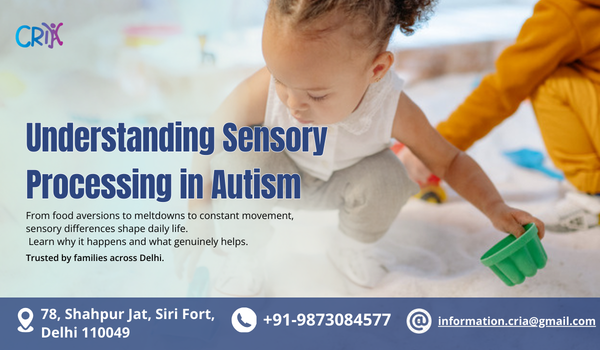
Sensory Processing in Autism: A Parent’s Practical Guide
Written by Dr. Priyanka Jain Bhabu | Founder & CEO, CRIA Foundation | Reading time: 10 minutes
Published: Feb 2026 | Category: Understanding Autism
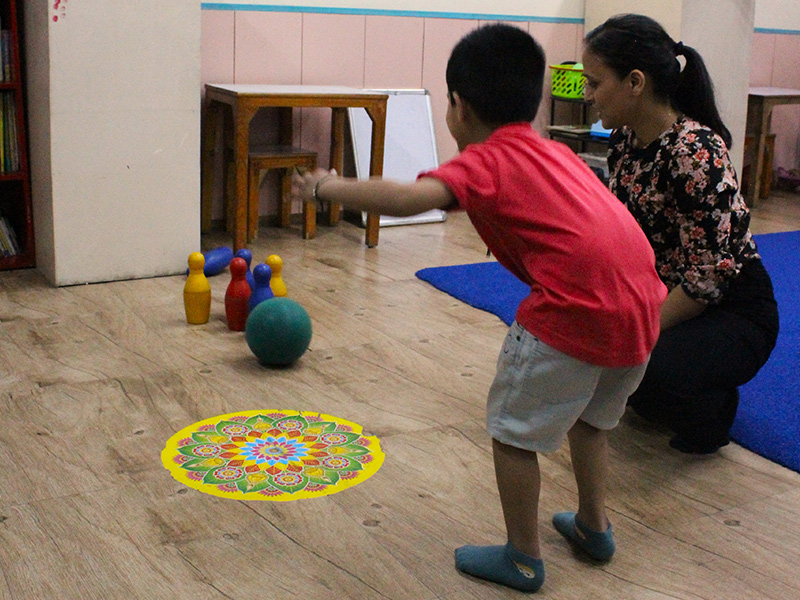
Table of Contents
- When the World Feels Too Loud
- What Is Sensory Processing, and Why Does It Work Differently in Autism?
- The Eight Senses: What Most Parents Don’t Know
- Hypersensitivity and Hyposensitivity: Two Sides of the Same Experience
- What Sensory Overload Actually Looks Like
- Common Sensory Challenges in the Indian Home and School Context
- What Helps: Practical Strategies for Everyday Life
- Sensory Diets: What They Are and How They Work
- When to Seek Occupational Therapy
- How CRIA Foundation Supports Sensory and Developmental Needs
- Frequently Asked Questions About Sensory Processing in Autism
- Your Child Is Not Being Difficult, They Are Being Overwhelmed
Your child will not wear socks with seams. They cover their ears at the pressure cooker. They have eaten the same three foods for two years. They spin in circles for twenty minutes and seem calmer afterwards. They cannot bear to be hugged, or they cling and seek pressure constantly.
You have probably been told some version of “he is just fussy” or “she needs to learn to cope.” You may have been made to feel that these are behavioural problems, failures of discipline or accommodation. They are not. They are sensory experiences. And for autistic children, sensory processing differences are not a peripheral feature of their experience: they are often central to how they move through the world every single day.
This guide explains what sensory processing in autism actually is, why it affects autistic children so profoundly, what it looks like in the contexts Indian families know, and what parents can do to genuinely help.
1. When the World Feels Too Loud
Imagine that every sound in a room, the fan, the traffic outside, two people talking, a distant television, reaches you at equal volume, with equal urgency. You cannot filter background from foreground. You cannot find the voice you need to listen to in the noise because everything arrives at once, at full intensity.
Now imagine you are five years old, in a classroom of thirty children, with a fluorescent light flickering slightly above you, wearing a uniform whose collar tag scratches your neck, and someone is asking you a question. This is not an exaggeration. For many autistic children, this is Tuesday.
2. What Is Sensory Processing, and Why Does It Work Differently in Autism?
Sensory processing is the brain’s ability to receive information from the body and the environment, organise it, and produce an appropriate response. For most people, this happens automatically. In autism, this filtering and calibration system works differently. The brain may be over-responsive to certain inputs, registering ordinary sensations as intense or even painful. It may be under-responsive to others, failing to register sensations that most people would notice immediately.
Sensory processing differences in autism are not behavioural choices or attention-seeking. They are neurological realities, and understanding them changes how every interaction with your child can feel.
3. The Eight Senses: What Most Parents Don’t Know
| Sense | What it processes | Example in autistic children |
|---|---|---|
| Visual | Light, colour, movement, contrast | Distress at fluorescent lighting, crowds, or busy visual environments |
| Auditory | Sound, volume, pitch, frequency | Covering ears at sudden sounds; unable to focus in noisy classrooms |
| Tactile | Touch, texture, temperature, pain | Refusing clothing with seams, tags, or fabrics; distress at light touch |
| Gustatory | Taste, texture, temperature of food | Highly restricted diet; gagging at certain food textures |
| Olfactory | Smell | Distress at strong perfumes, food smells, or classroom odours |
| Proprioceptive | Body position, muscle and joint feedback | Seeking heavy pressure, crashing into things, difficulty knowing where body is in space |
| Vestibular | Balance, movement, spatial orientation | Craving spinning or swinging; or intense fear of movement and heights |
| Interoceptive | Internal body signals (hunger, thirst, pain) | Not noticing hunger or thirst; difficulty identifying emotional states |
4. Hypersensitivity and Hyposensitivity: Two Sides of the Same Experience
Hypersensitivity (over-responsiveness)
Common signs in the Indian home and school context:
- Distress or covering ears at everyday household sounds like the cooker, mixer, or traffic.
- Refusing to wear school uniforms or specific clothing textures.
- Highly restricted diet, often with strong aversions to mixed textures.
- Distress in crowded, bright environments like markets or wedding functions.
- Reacting strongly to light touch, such as an unexpected pat on the head.
Hyposensitivity (under-responsiveness)
Common signs:
- Seeking intense physical input, such as crashing, jumping, spinning, or pressing against walls.
- Apparent indifference to pain, temperature, or illness.
- Putting objects in the mouth beyond typical developmental age.
- Not noticing hunger, thirst, or the need for the toilet.
- Holding or gripping others with more force than intended.
5. What Sensory Overload Actually Looks Like
Sensory overload occurs when cumulative input exceeds what a child can process. It may present as:
- Meltdown: An intense, uncontrolled response to overwhelm. It is a loss of regulatory capacity, not a choice.
- Shutdown: Withdrawal, going quiet, becoming unresponsive, or appearing “zoned out.”
- Increased stimming: A rise in repetitive behaviours like hand-flapping or humming to help self-regulate.
- Aggression or self-injury: An attempt to discharge or escape an unbearable sensory state.
A meltdown is not a behaviour to be punished: it is a communication. It tells you that your child’s nervous system has reached its limit.
6. Common Sensory Challenges in the Indian Home and School Context
- Family gatherings and festivals: Diwali, weddings, and celebrations involve loud firecrackers, music, and unfamiliar smells.
- The Indian school environment: Large class sizes and the noise from multiple classrooms can be exhausting.
- Food and mealtimes: Cultural weight on eating together can make food restriction feel like a social rejection, even though it is sensory.
- Clothing and grooming: Traditional dress, haircuts, and nail-cutting can be sites of significant distress.
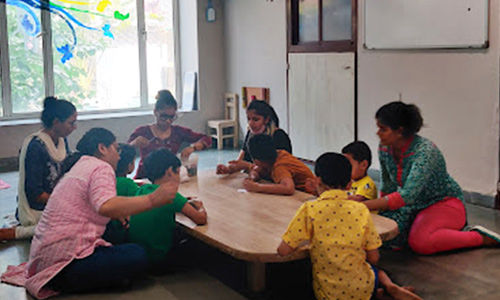
Planning ahead for high-sensory environments can make a difficult day manageable.
7. What Helps: Practical Strategies for Everyday Life
- Identify your child’s specific sensory profile: Observe which environments cause distress and which sensations they seek.
- Modify the environment: Use warmer lighting, remove tags from clothes, or use noise-cancelling headphones.
- Respect sensory avoidance: Forcing exposure does not desensitise, it builds anxiety.
- Honour sensory seeking: Unless a stim is causing harm, allowing it is a form of regulatory support.
- Prepare for high-sensory events: Tell your child what to expect and identify a quiet “retreat” space in advance.
8. Sensory Diets: What They Are and How They Work
A sensory diet is a personalised plan of activities to keep a child regulated. It might include:
- Heavy work activities: Carrying a backpack or climbing to provide proprioceptive input.
- Movement breaks: Jumping or stretching before a demanding task.
- Decompression: A quiet, low-stimulation period after school.
- Calming inputs: Deep pressure through a weighted blanket before high-stress situations.
9. When to Seek Occupational Therapy
Seek an assessment from an Occupational Therapist (OT) if sensory responses prevent daily function, if grooming results in major distress, or if school placement is being affected by dysregulation.
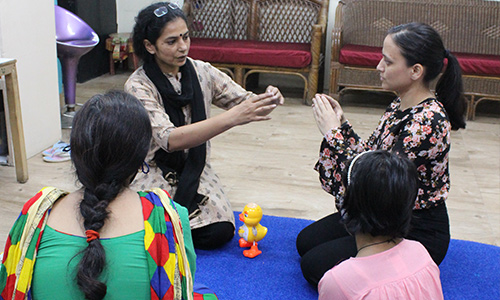
OT builds the nervous system’s capacity to engage with the world more comfortably.
10. How CRIA Foundation Supports Sensory and Developmental Needs
Sensory processing is addressed as an integral part of CRIA Foundation’s individualised programmes. Our team works with families to embed strategies into home routines, and our school support programme helps teachers make environmental adjustments.
11. Frequently Asked Questions About Sensory Processing in Autism
1. What is sensory processing disorder in autism?
It refers to differences in how the brain filters and responds to input. It is a neurological reality, not a choice.
2. Why does my autistic child cover their ears at everyday sounds?
Hypersensitivity means ordinary sounds can feel intrusive or painful, like being in front of a speaker at full volume.
3. Is my child’s restricted diet a sensory issue?
Yes, food restriction is often driven by aversions to taste, texture, or smell, not defiance.
4. What is stimming and should I try to stop it?
Stimming is a self-regulation strategy. Suppressing it without alternative tools typically increases anxiety.
5. What is a sensory meltdown and how is it different from a tantrum?
A meltdown is uncontrolled overwhelm. It is not goal-directed and requires regulation rather than discipline.
6. How do I know if my child needs occupational therapy?
If sensory responses prevent school, mealtime, or family participation, an OT assessment is worth pursuing.
7. How does CRIA Foundation help?
We integrate sensory strategies into every individual programme and school support plan. Contact us for a consultation.
Your child is not broken. They are different, and in the right environment, with the right support, different can be extraordinary.
At CRIA Foundation, we have seen it happen for over 15 years.
Explore our mission, see our testimonials, or learn how to make a difference.